
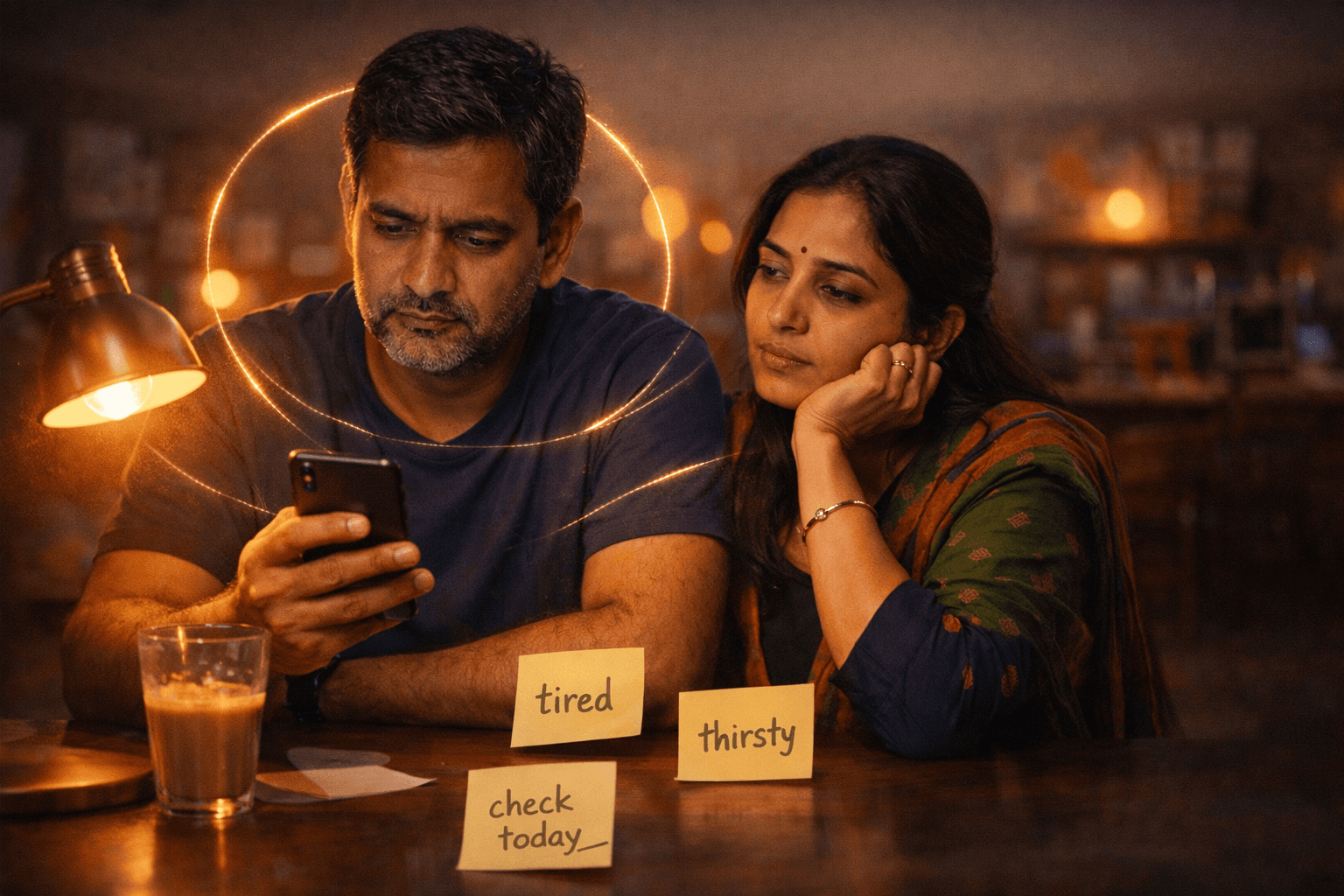
Featured insight
Am I At Risk for Diabetes? The Early Signs We All Ignore

infected-mushroom
April 8, 2026•5 min read
#learning
Nobody Told Me I Was Walking Towards Diabetes Until I Checked
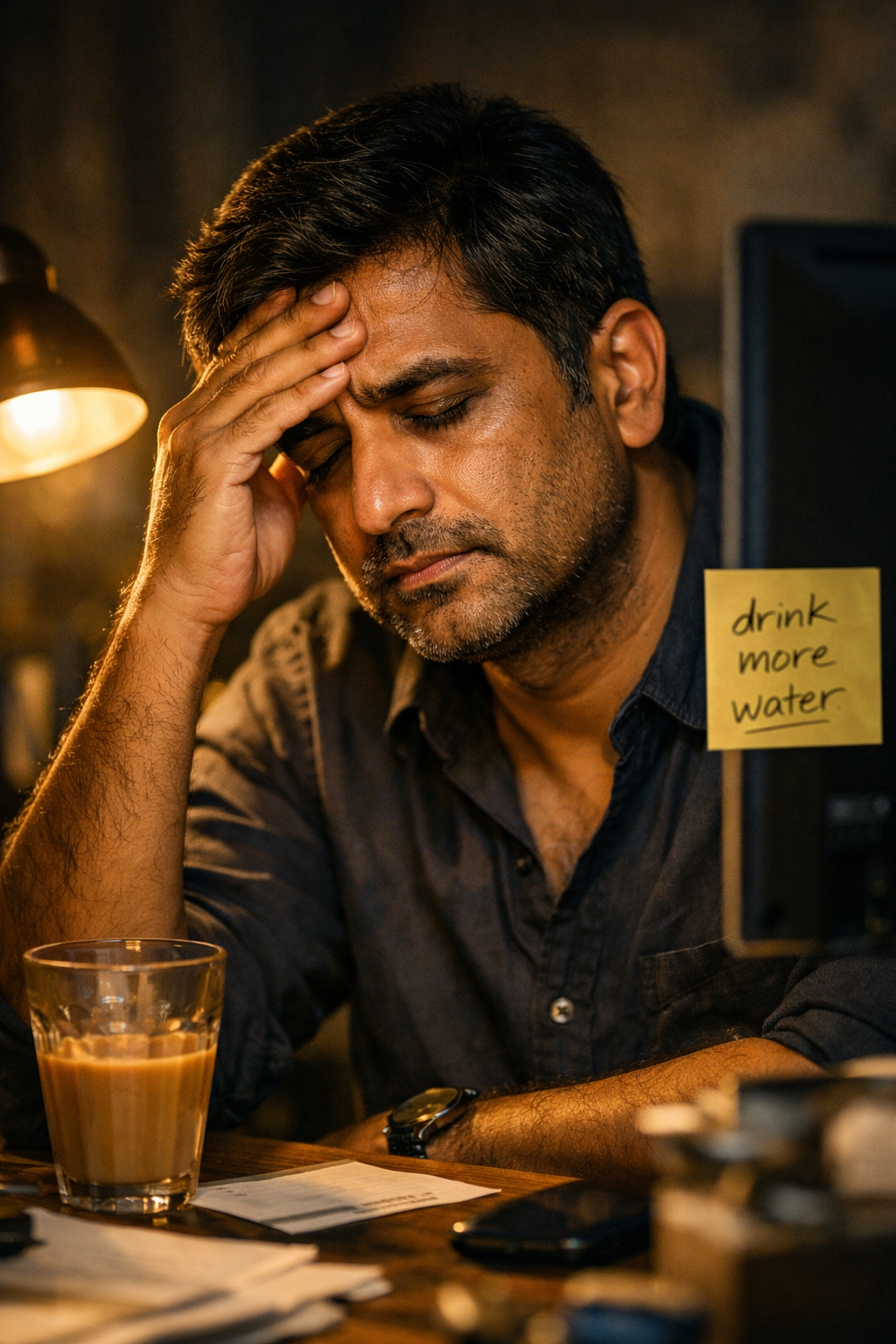
My uncle was diagnosed with diabetes at 47.
My father 49.
Last year, at a routine checkup, my doctor looked at my report and said, "Your numbers are not dangerous yet. But keep an eye on this."
I was 38.
I drove home and Googled "do I have diabetes" for the next 45 minutes.
Got nothing useful. Just scary articles and a flood of medical terms
I could not understand.
That moment sitting in my car, phone in hand, genuinely worried is something I keep thinking about. Because I know I am not the only one who has been there.
The Thing Nobody Talks About
Here is the strange part about diabetes. Most people who are heading towards it have no idea.
Not because they are careless. But because the early signs are things we all just... explain away.
Tired in the afternoon? Long day at work.
Thirsty all the time? It is summer.
A little overweight? I will start working out next month.
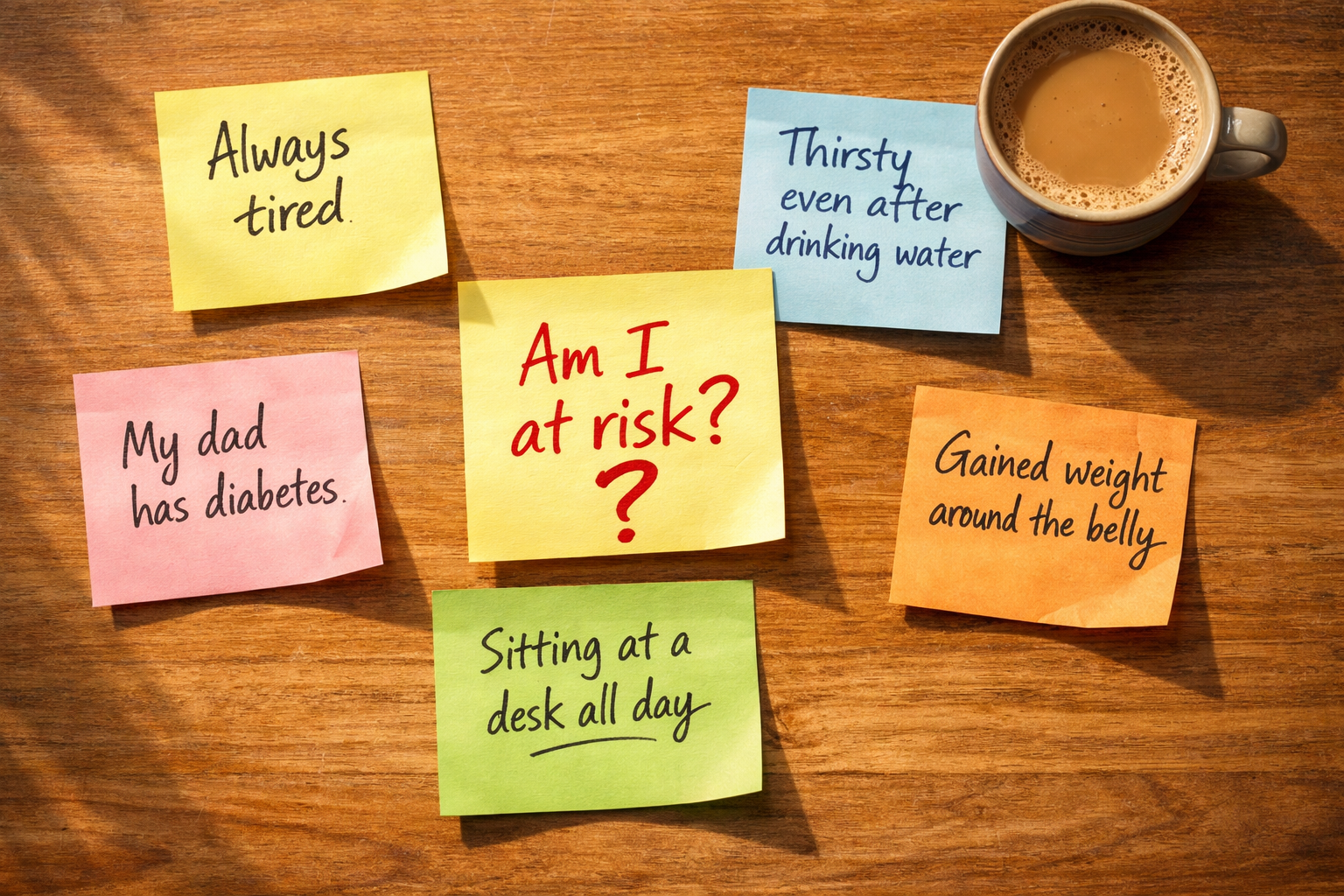
Sound familiar?
I asked my doctor once "How do I know if I should be worried?"
She said something I never forgot. She said, "Most people find out they had prediabetes only after it becomes diabetes. That window in between that is where everything can change."
That window. That is the whole point.
The Problem With Existing Tools
After my scare, I started looking for something simple. Some way to just understand where I stood without booking an appointment, waiting three weeks, getting a blood test, and then decoding a report full of terms like "fasting plasma glucose" and "HbA1c range."
Everything I found was either a boring 15-question form that felt like filling taxes, or a clinical website that ended with "consult a doctor" without telling me anything actually useful.
None of them spoke to me. None of them mentioned the rice I eat every day for lunch. Or the five cups of chai. Or the fact that I sit at a desk for nine hours without moving.

Then I Found Something Different
A few weeks ago I came across a tool called
I was skeptical. Another quiz, I thought.
But this one was different from the first question.
It did not ask me for my BMI or waist circumference in centimetres.
It just asked me to describe myself in my own words. So I wrote something like: "My dad had diabetes. I feel tired a lot. I drink chai five times a day with sugar. I barely exercise and I work from home sitting all day."
Two minutes later I had a result that actually made sense.
Not just a risk score. A full explanation why I got that result, what specific things in my life were pushing the risk up, and three very specific things I could start doing that same day.
It told me my chai habit was adding more hidden sugar per day than I had ever thought about. It told me that even a 10-minute walk after meals would make a real difference. It mentioned my family history and explained what that actually means for me personally. And it said all of this in plain words. Like a friend explaining
something, not a doctor writing a report.

What I Liked Most About It
A few things stood out.
You can get your result in your own language. Hindi, Hinglish, Tamil, Telugu, Bengali, Marathi it works in all of them. Which sounds small but is actually huge. Because a lot of people who need this information the most are not comfortable reading in English.
It also knows that Indian bodies and Indian lifestyles are different.
The risk thresholds, the food questions, the way it understands a rice-heavy diet or a desk job in a hot city none of the Western tools get any of that right.
And it does not pretend to be a doctor. Every result comes with a clear note that this is an awareness check, not a diagnosis. It tells you honestly when to see a doctor and when you can just make a few changes and recheck.
That honesty is what made me trust it.
The Thing About Knowing Early
Here is what I wish someone had told me ten years ago.
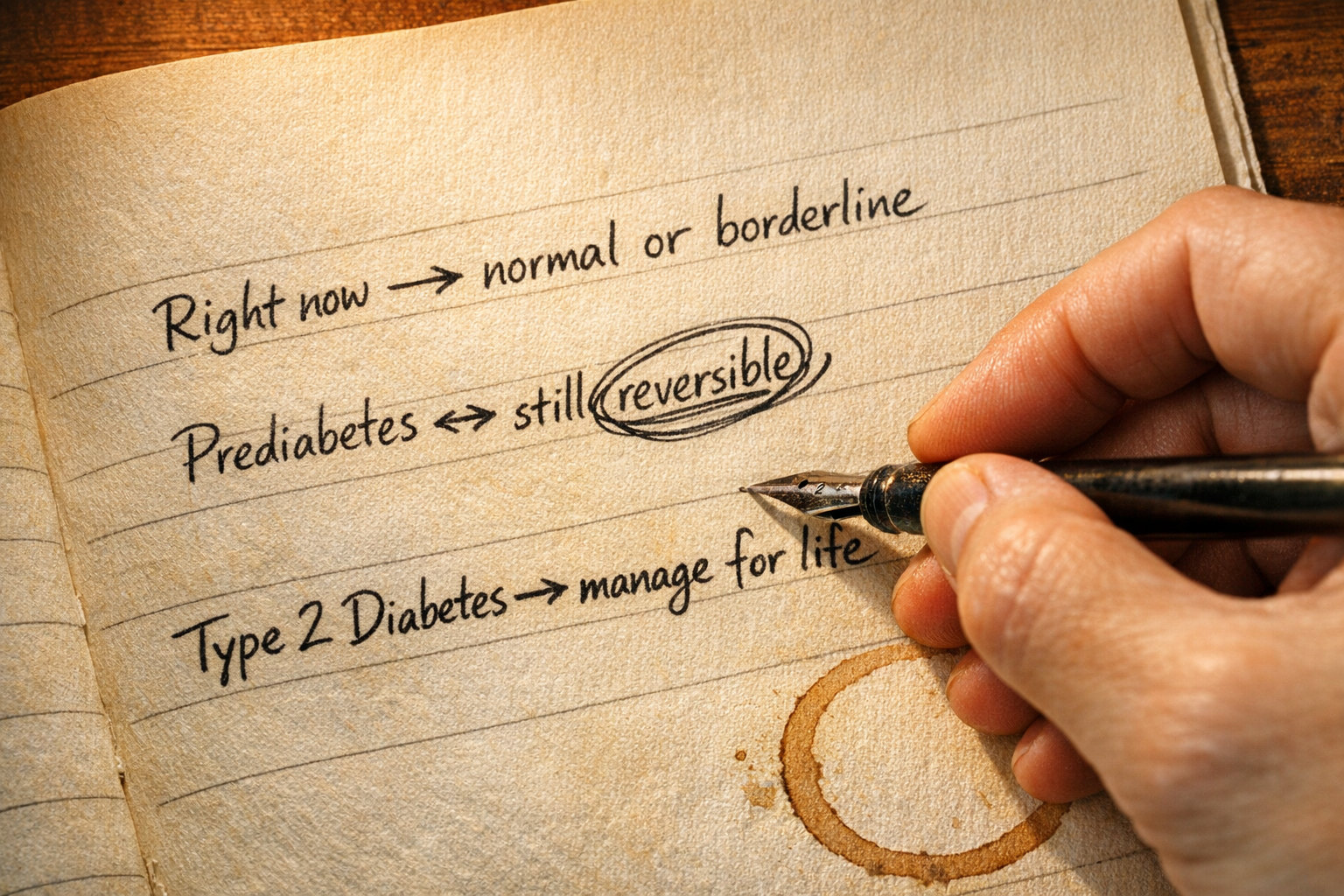
Prediabetes is reversible. Not manageable actually reversible.
But only if you catch it early. By the time it becomes Type 2 diabetes, you are managing it for life.
That window my doctor talked about most people miss it simply because they never check. Not because they do not care. But because there was never a simple, human, affordable way to know.
One Small Thing That Changes Everything
I changed one thing after using the tool.
I cut my chai from five cups to two. Reduced the sugar to half a spoon each. That is it. Nothing dramatic.
My afternoon tiredness is less. My doctor, at my next visit three months later, said my numbers looked better.
I am not saying a two-minute check changed my life. But it started a conversation with myself that I had been avoiding for years.That is what awareness does. It does not fix things. It starts things.If you have been feeling tired lately, or thirsty more than usual, or you have a parent or sibling with diabetes, or you just have a quiet feeling in the back of your head that you should probably check this is for you.
It takes two minutes. It is in your language. It will not scare you. You might be completely fine. And that is a great thing to know. Or you might be in that window the one where everything can still change.
Either way, knowing is always better than wondering.
*This is not a medical tool and does not replace a doctor's advice.
Always consult a healthcare professional for actual diagnosis.*
Share this if you know someone who keeps putting off their health check. Sometimes people just need a nudge.

0 Comments

No comments yet. Be the first to start the discussion!