
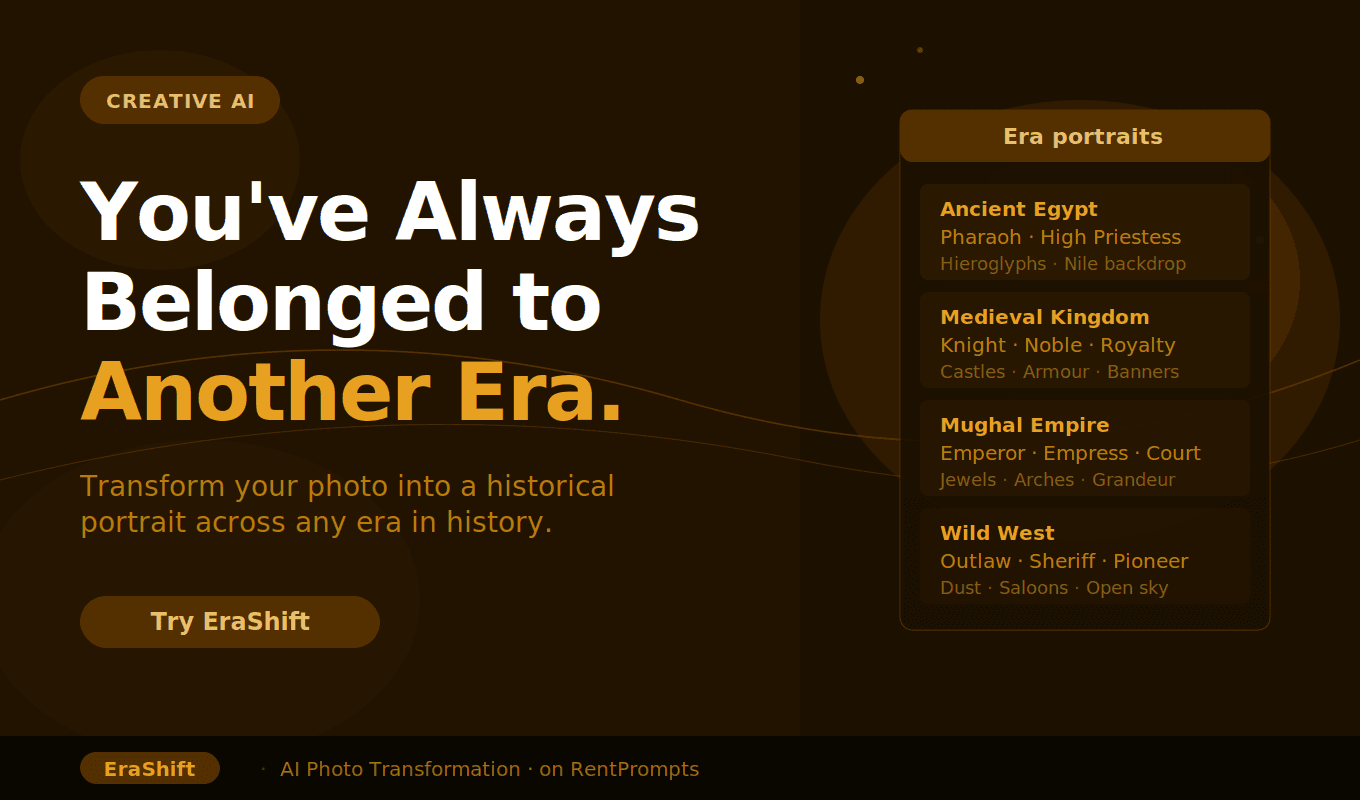
Featured insight
How Historical Portrait Art Evolved Across Civilizations — And What AI Is Learning From It

sakshi.__
April 18, 2026•7 min read
#research
How AI Is Recreating Historical Eras Through Portrait Art
From Egyptian pharaohs to Mughal emperors — here's what makes each era's visual identity so distinct, and how AI is bringing it to life.
Every era had its own visual language. Before cameras existed, portraits were power. The way a civilization chose to depict its people — the colors, the clothing, the symbols — said everything about what that culture valued.
Walk through any major museum and you'll notice it immediately. Egyptian portraits feel rigid and symbolic. Medieval portraits feel flat and devotional. Mughal miniatures burst with jewel-toned detail. Each era had a visual grammar, and artists spent lifetimes learning it.
What's remarkable today is that AI has learned those grammars too — and can place your face inside them.
Ancient Egypt: The Art of Eternity
Egyptian portrait art wasn't meant to capture a moment. It was meant to last forever.
That's why Egyptian figures were painted in such a specific way — the head shown in profile, the eye shown frontally, the shoulders wide and flat. This wasn't a lack of skill. It was a deliberate choice to show every important part of the body clearly, so the soul could recognize itself in the afterlife.
Gold was everywhere — not for decoration, but because gold was considered the flesh of the gods. The blue and gold of the royal headdress, the heavy kohl lining the eyes, the wide turquoise collar necklaces — each element carried deep meaning.
Medieval Europe: Portraits as Devotion
Medieval European art looks flat to modern eyes — and that's intentional.
Artists weren't trying to create depth or realism. They were trying to communicate spiritual truth. Figures were elongated, halos were gold, backgrounds were pure gold leaf. Clothing told a precise story — purple for royalty, red for the church, blue for the Virgin Mary.
Castles, armored knights, stone arches, heraldic symbols — these weren't just scenery. They were a language every viewer could read.
The Mughal Empire: Where Art Met Obsession
The Mughal emperors of India were genuinely obsessed with portrait painting — and the results are some of the most detailed artworks ever created.
Mughal miniature painting combined Persian refinement with Indian color tradition. Artists would spend months on a single portrait. The jewels, the fabric patterns, the architectural backgrounds — all rendered with almost impossible precision. Lapis lazuli blue was so expensive it was worth more than gold by weight. The richness of a Mughal portrait literally reflected the empire's wealth.
The Wild West: Photography Meets Myth
The American frontier era is one of the first historical periods where photography existed. And yet the visual identity of the Wild West is largely a myth constructed afterward — through dime novels, early cinema, and Hollywood.
The muted earth tones, worn textures, dusty landscapes, wanted posters — it's a mood more than a strict historical style. And that mood is immediately recognizable worldwide.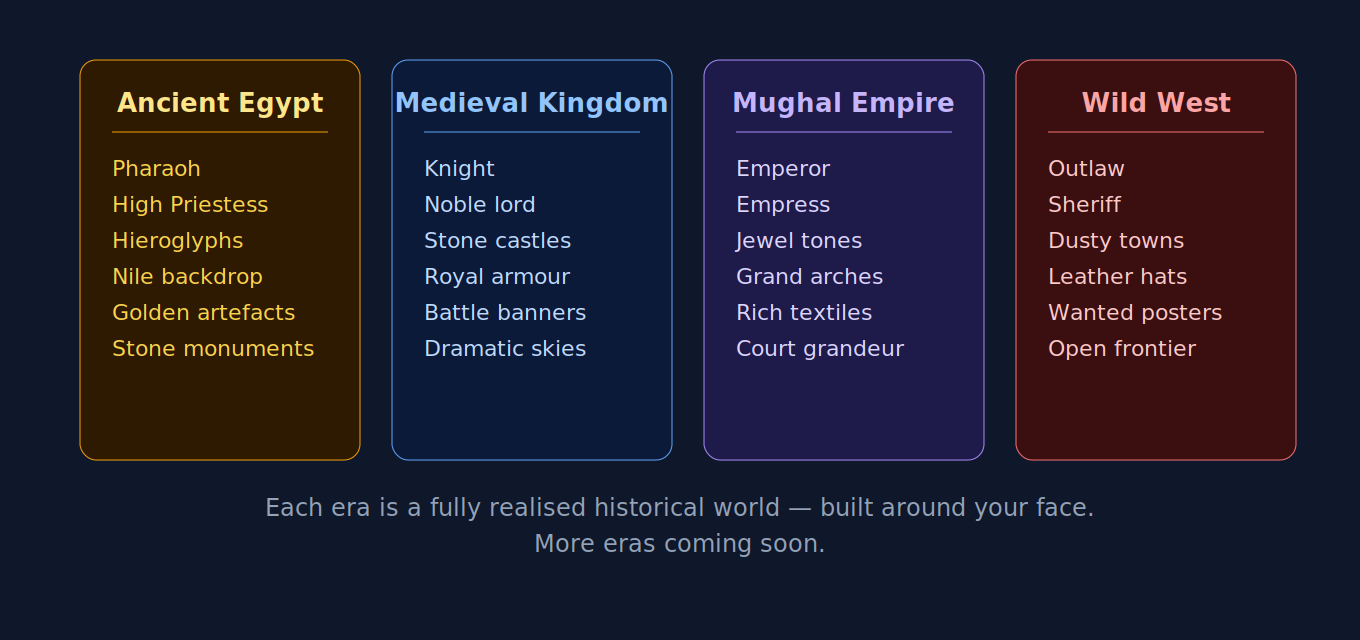
How AI Actually Recreates These Styles
The technology behind AI portrait transformation is built on diffusion models — systems trained on enormous datasets of historical artworks, museum archives, and portrait collections.
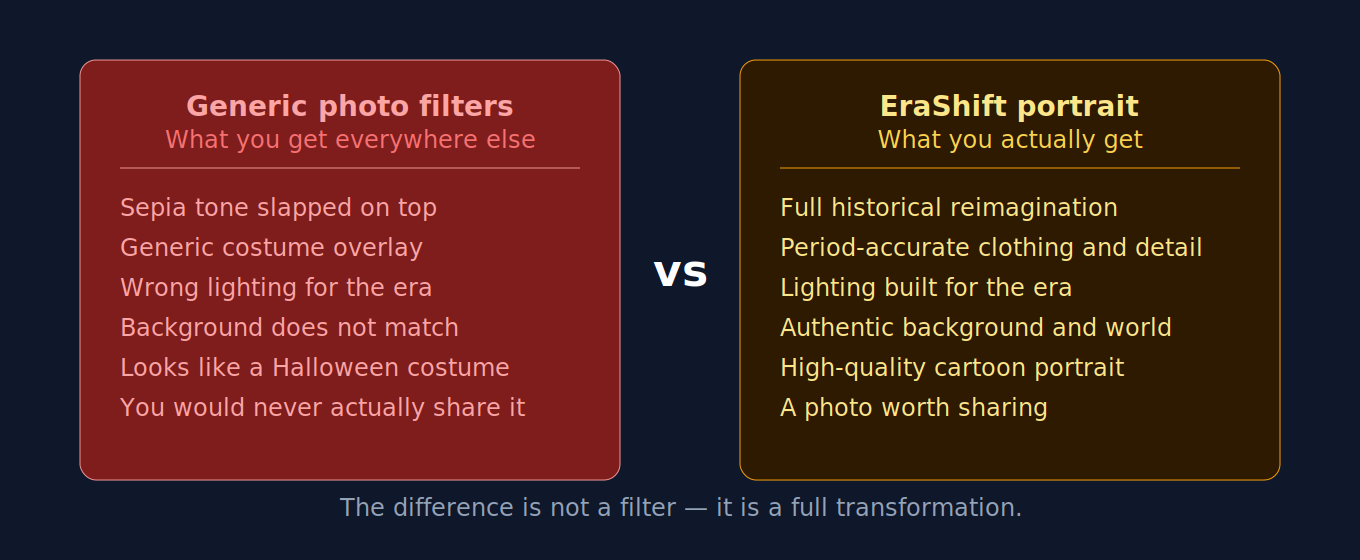
The AI doesn't just paste a hat onto your photo. It learns the underlying patterns of each style: the typical color palette, the lighting direction, the proportions artists of that era preferred, the cultural symbols that appear in the background.
When you submit a photo, the AI identifies the structural elements of your face — bone structure, proportions, key features — and rebuilds those elements inside the visual language of the selected era. The result isn't your photo with a filter. It's a genuine reinterpretation of your likeness through the lens of a different artistic tradition.
This is fundamentally different from what generic photo filters do.
Why This Matters Beyond the Fun
There's something genuinely interesting happening when people start seeing themselves through historical art styles.
It creates a personal connection to history that textbooks rarely achieve. When you see yourself as a Mughal emperor, you start asking questions — what did that empire actually look like? What did people wear? What did they value? The portrait becomes a doorway.
Digital artists are also using AI era transformation as a starting point for original work — studying how the AI interprets different styles and using that as reference for their own historical illustration.
Who Is Actually Using This
Beyond curiosity, people are finding real uses for era portraits.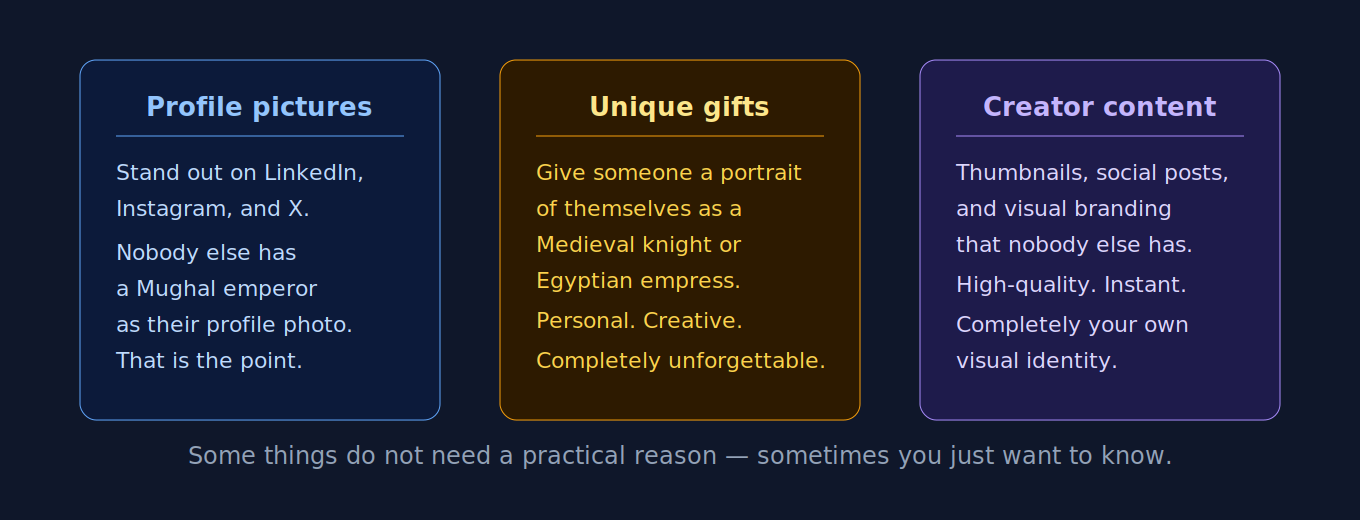
Try It Yourself — 3 Steps
No design skills needed. No editing software. No complicated prompts.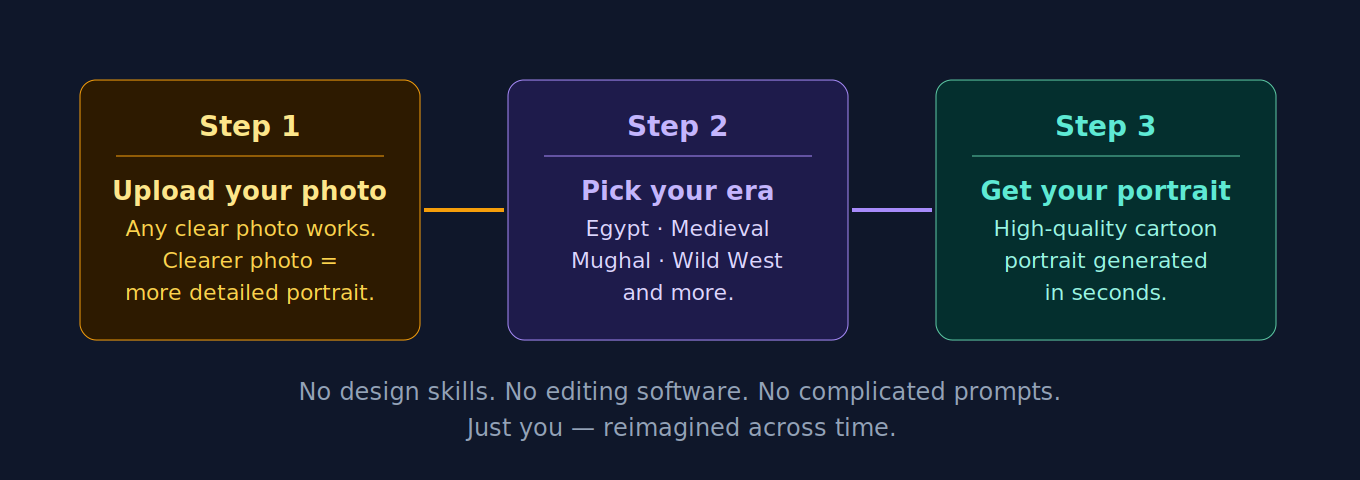
AI portrait tools that draw on these historical traditions are making this kind of artistic exploration accessible to anyone. The technology doesn't replace the history — it creates a new way to engage with it. For anyone curious about where they might have fit across time, the answer is now a single photograph away.
#Erashift
0 Comments

No comments yet. Be the first to start the discussion!