
Featured insight
Why AI Ecosystems Are the Future of Business Automation

diptipawar1021
September 25, 2025•5 min read
#learning
Over the last decade, businesses have seen AI tools transform specific functions—chatbots in customer service, RPA bots in finance, analytics dashboards in marketing. Yet these tools often remain disconnected, solving one problem while creating another: fragmentation.
The real transformation comes not from tools but from ecosystems.
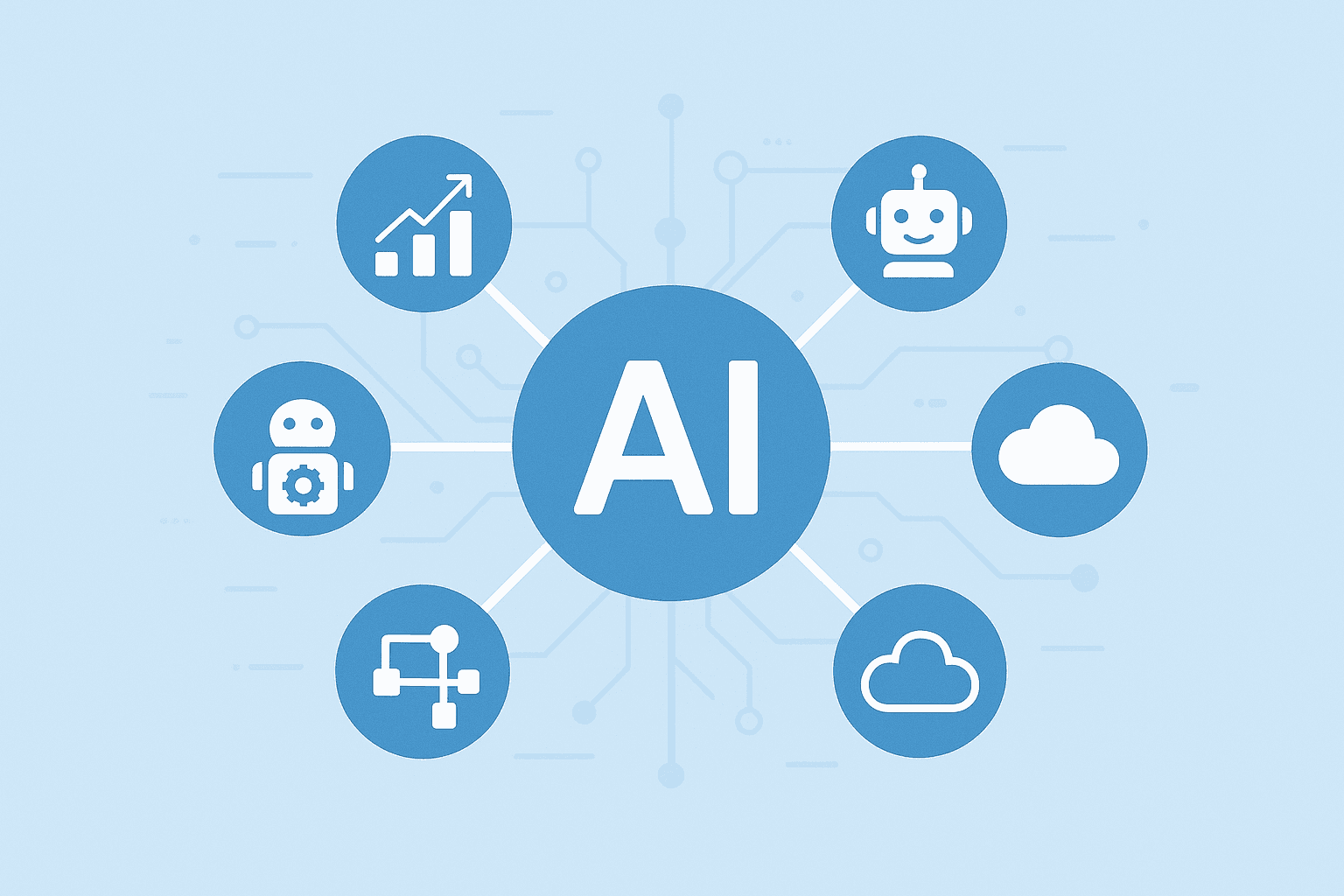
AI ecosystems integrate data, intelligence, and workflows into a unified system that scales across the entire business. They don’t just improve efficiency; they enable new business models, faster innovation, and smarter decision-making.
What Makes an AI Ecosystem Different?
- Integration over isolation
- Tools act independently, but ecosystems connect multiple functions—sales, operations, finance, HR into one intelligent flow.
- Data as a shared foundation
- Ecosystems unify scattered data, ensuring every function operates with the same intelligence layer.
- Scalable intelligence
- As business needs evolve, ecosystems adapt, pulling in new models, automations, or integrations without breaking workflows.
Benefits of AI Ecosystems
- Cross-department scalability
- An AI ecosystem links different business areas, enabling workflows that run seamlessly end to end.
- Example: A customer request triggers not just a chatbot but also inventory updates, logistics scheduling, and personalized marketing.
- Holistic decision-making
- Unified data means leaders see the full picture, not fragmented insights from separate tools.
- Faster innovation cycles
- By connecting customer data, product feedback, and market signals, ecosystems accelerate product development and service delivery.
- Resilience and adaptability
- Ecosystems are designed to evolve new AI models, regulations, or business goals can be integrated without starting over.
Industry-Wide Impact
- Retail: From isolated recommendation engines to fully connected ecosystems that manage supply chains, customer behavior, and personalized offers.
- Healthcare: Moving beyond diagnostic tools to ecosystems that integrate patient records, treatment plans, billing, and scheduling.
- Finance: Ecosystems combining fraud detection, compliance checks, and customer support to deliver trust and efficiency.
Where Platforms Like RentPrompts Fit
Platforms such as RentPrompts embody this shift by enabling businesses to design ecosystems instead of relying on isolated tools. With RentPrompts, companies can combine text, image, audio, and video AI models into a single workflow, creating automation that goes beyond narrow use cases.
For example, instead of just deploying a chatbot, a company could:
- Generate customer-facing landing pages,
- Automate campaign content,
- Analyze engagement data,
- And connect everything into one adaptive ecosystem.
This is the ecosystem mindset in action: AI not as a collection of tools, but as a network of intelligence powering growth.
Why Ecosystems Are the Future
AI tools will remain part of the journey, but the businesses that thrive will be those that build ecosystems adaptive, connected, and intelligent environments that transform industries.
The future of automation isn’t about what tool you use; it’s about how those tools work together.
In the next part of this series, we’ll dive deeper into AI Ecosystems Across Industries: How Each Sector Wins exploring practical use cases across healthcare, finance, retail, education, and more.
0 Comments

No comments yet. Be the first to start the discussion!