
Featured insight
From AI Tools to AI Ecosystems: The Next Big Leap in Business Automation

diptipawar1021
September 25, 2025•5 min read
#learning
In today’s business world, one question echoes across boardrooms: “If we invest in AI, how do we scale the impact?”
For years, companies have experimented with standalone AI tools — a chatbot for customer queries, an analytics dashboard for reporting, or an RPA bot for repetitive tasks. These tools bring quick wins, but they often remain disconnected islands. The result? Data silos, fragmented workflows, and limited business value.
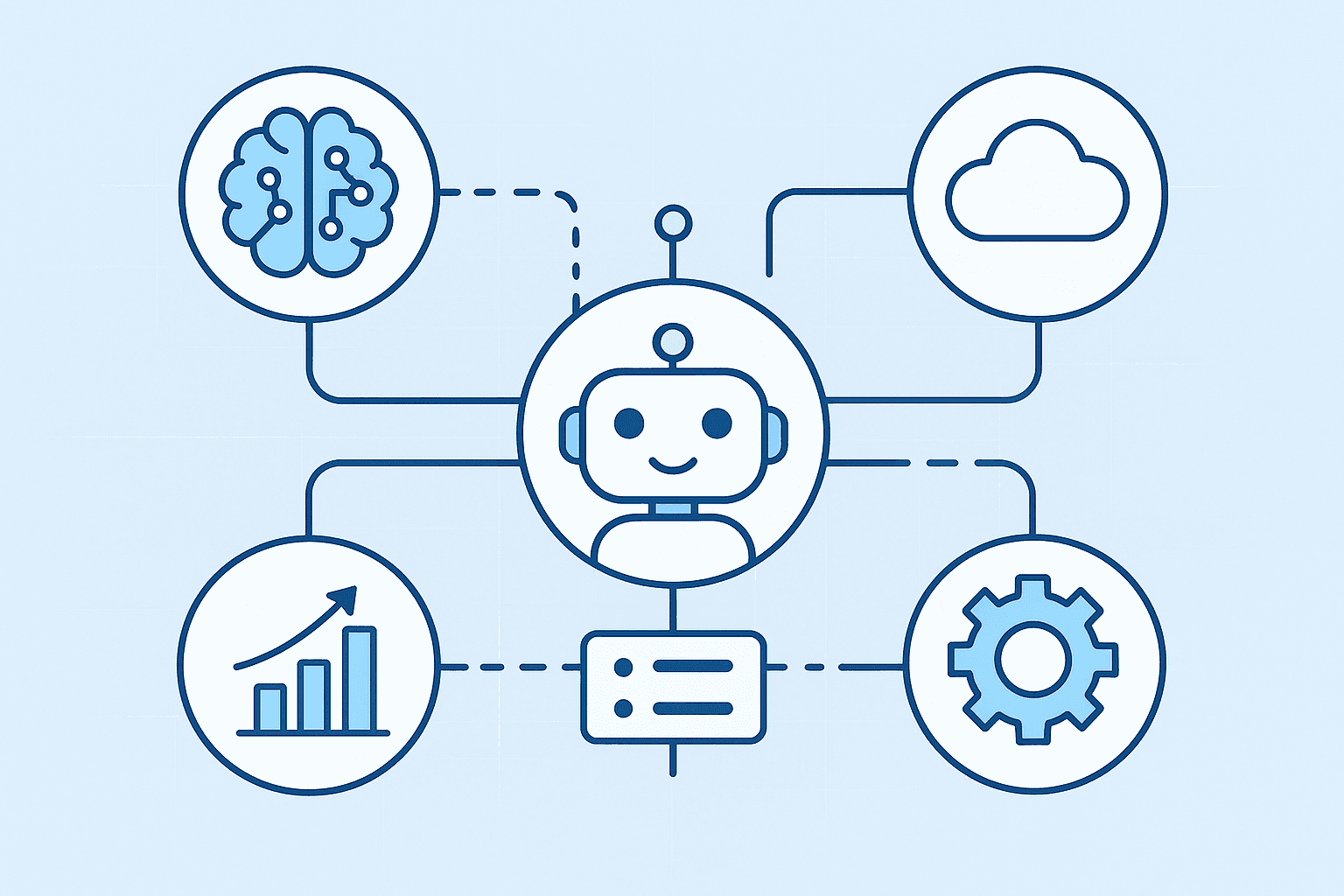
This is where AI ecosystems come into play. Instead of relying on isolated tools, an AI ecosystem integrates multiple intelligent components—from data pipelines to predictive models to automation workflows—into a connected environment. It’s not just about doing tasks faster; it’s about creating self-sustaining, intelligent systems that adapt and grow with your business.
From Tools to Ecosystems: Why It Matters
1.Scalability beyond silos
AI tools can automate tasks, but ecosystems scale automation across departments. Imagine your sales AI talking to your supply chain AI, creating a seamless flow of insights.
2.Unified intelligence
Instead of data being scattered across ten different tools, ecosystems unify information into a single intelligent layer, enabling smarter decision-making.
3.Continuous improvement
AI ecosystems learn and adapt. For example, when customer feedback connects directly with product development via automation, innovation speeds up dramatically.
Real-World Examples
- Retail: Instead of just using a recommendation tool, an AI ecosystem connects inventory management, personalized marketing, and customer support into one intelligent cycle.
- Finance: Fraud detection becomes far more effective when combined with customer support AI and compliance automation.
- Healthcare: Beyond diagnosis tools, ecosystems connect patient data, scheduling, billing, and treatment recommendations into a holistic experience.
Where Platforms Like RentPrompts Fit
Platforms such as RentPrompts are moving toward this ecosystem-driven vision. Instead of offering a single AI feature, they enable businesses to combine multiple AI models (text, image, audio, video) into workflows. This makes it possible to design end-to-end automation—from generating marketing content to building customer-facing AI solutions—all under one ecosystem.
The difference is subtle but powerful: it’s not just about using AI; it’s about designing systems of intelligence that grow with your business.
Why This Shift is Urgent
Businesses that continue relying only on AI tools risk falling behind. Competitors who adopt ecosystems will not just automate tasks but will redefine industries through connected intelligence.
This isn’t just the next step in automation—it’s the big leap.
In the next part of this series, we’ll break down what AI tools can (and can’t) do for businesses, and why their limitations push us toward ecosystems.
0 Comments

No comments yet. Be the first to start the discussion!